Maintaining the quality and safety of your food essentially depends on keeping your refrigerator at the right temperature. By knowing the most suitable temperature settings, you can prolong the shelf life of your food, reduce the risk of foodborne illnesses and guarantee that your meals taste their best. This article explores the recommended temperature settings for your freezer and refrigerator, the reasons behind these recommendations and some helpful tips for successfully preserving these temperatures.
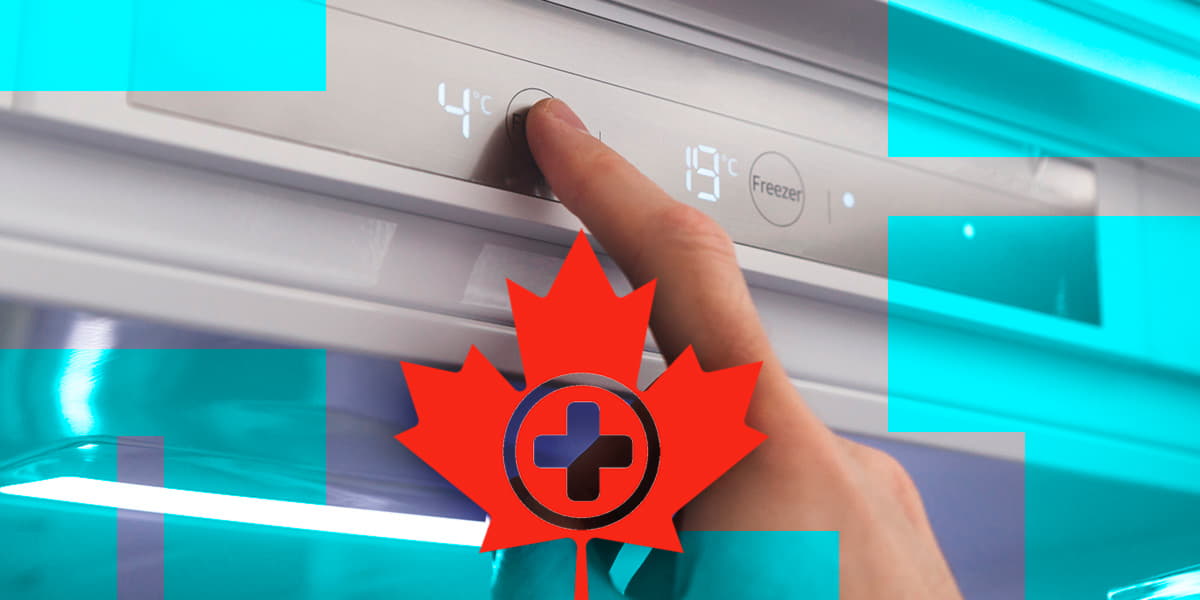
Canada Health recommends maintaining a freezer at 0°F (-18°C) and a refrigerator at or below 40°F (4°C). These temperature settings are intended to keep your food safe to consume by slowing the growth of bacteria and other organisms that can cause foodborne diseases.
Why 40°F for the refrigerator?
- Prevention of bacterial growth: The majority of bacteria that cause foodborne diseases grow best in the “danger zone” which is defined as the temperature range between 40°F and 140°F (4°C and 60°C). It is possible to considerably slow down the growth of dangerous bacteria like Salmonella, E. coli and Listeria by maintaining your refrigerator at or below 40°F.
- Food quality maintenance: Maintaining the proper temperature in your refrigerator helps keep your food fresh and nutrient-dense. Dairy items are consequently less prone to spoil prematurely, fruits maintain their flavor and vegetables stay crisp.
- Energy efficiency: Modern refrigerators are made to operate best between 37°F and 40°F (3°C to 4°C). Your refrigerator can operate more efficiently and save you money on energy bills if you set it within this range.
Why 0°F for the Freezer?
- Food preservation: Freezing food to a temperature of 0°F (-18°C) or below prevents germs and other microorganisms from growing. This temperature successfully keeps your frozen meals safe and high-quality for a longer time.
- Texture and flavor preservation: Food’s texture, flavor and nutritional value can all be preserved by rapidly freezing it at 0°F. Slow freezing may cause ice crystals to form, which can harm food’s cell structure and reduce its quality.
- Preventing freezer burn: Food that has been exposed to air and moisture in the freezer is more likely to develop freezer burn. Food may get dry, discolored spots from freezer burn, which can alter the food’s flavor and texture. It can be avoided by maintaining your freezer at 0°F.
How to keep your temperature at the optimal level
- Use a refrigerator thermometer: It is a good idea to use an additional thermometer to ensure accuracy even if your refrigerator has an integrated thermostat. For the best accurate reading, place it in the middle of the refrigerator.
- Refrain from overloading: Putting too many items in your refrigerator will restrict airflow and result in inconsistent cooling. Make sure there is enough room for air to flow around the food items.
- Frequent maintenance: To guarantee efficient operation, clean the condenser coils frequently. Your refrigerator may need to work harder and have more difficulty maintaining the proper temperature if its coils are dirty.
- Examine the door seals: Ensure that the door seals are free of debris and in good condition. The refrigerator could have trouble keeping the right temperature if there are damaged seals that let warm air in.
- Monitor and adjust: Check the temperature settings frequently and make any necessary adjustments. The inside temperature can be impacted by changes in the seasons, the quantity of food stored and how often doors are opened.
It is imperative for your food safety and quality that you keep the freezer and refrigerator at the proper temperatures of 0°F (-18°C) and 40°F (4°C), respectively. By understanding the significance of these temperature settings and adhering to the maintenance instructions, you can make sure that your food stays healthy, nutritious and safe to consume. The lifespan of your appliance and the quality of your food can be greatly improved by making the effort to properly manage the temperature, which will ultimately benefit both your health and your wallet.